
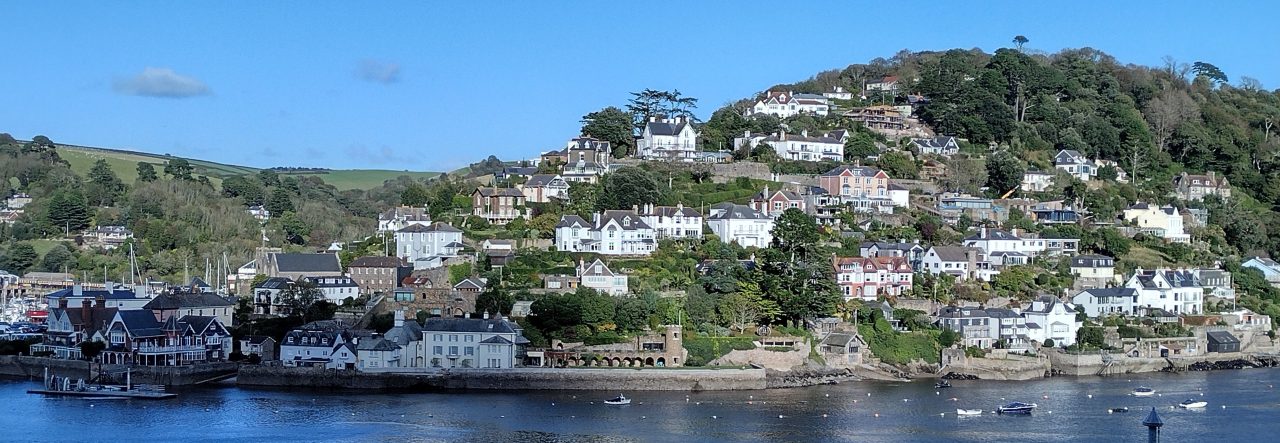
On passage through the ‘labyrinth of life’ you perform many tasks, mostly practical. often boring, seldom rewarding, occasionally interesting, but rarely romantic. However, this short study of local lights and lighthouses fits into that rare last category, touching on those which illuminate the world’s seaways, the subject of many books and poems — and there’s even a Lighthouse Society.
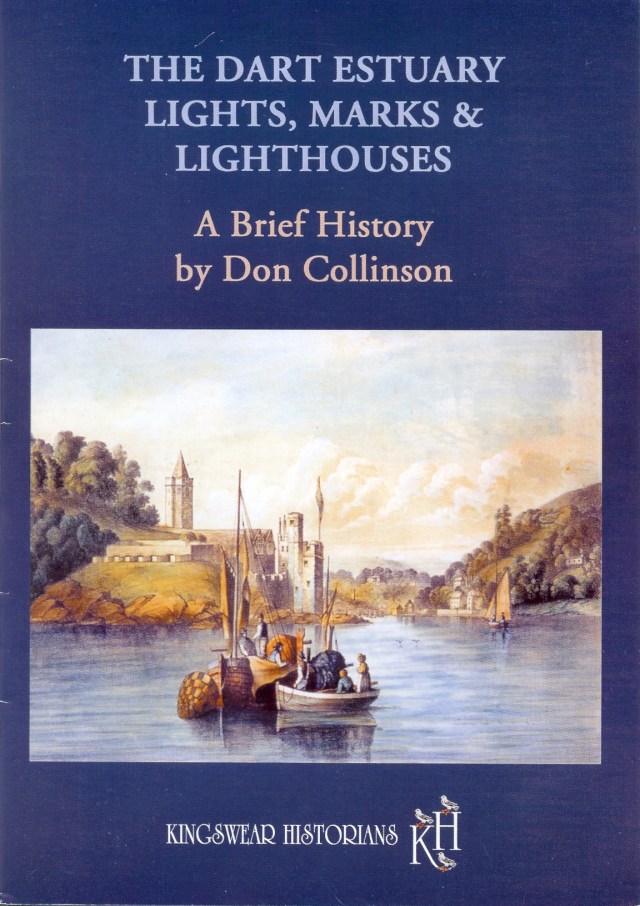
The popular conception of a lighthouse is of a stone splayed truncated tall tower, concentric on plan and surmounted by a platform containing a circular glazed light, capped by a lead-roofed cupola with an ornate finial weather vane. This is not always so, for although Dartmouth Harbour’s former lighthouses conform in principle, they were both octagonal on plan. The early Dartmouth Castle Lighthouse had four short and four long vertical sides being castellated at the top, and surmounted by a small turret containing the light. The 1856 designer and builder, Thomas Lidstone, probably drew his inspiration from the adjacent Dartmouth Castle. The square tower in the outer ramparts of the Castle was also crowned by a small turret which for many years had carried the light.
 Kingswear Historians