KINGSWEAR HISTORIANS
Chairman: David Evans
Secretary: Neil Baxter Treasurer and Membership Secretary: David Williams
RAF Kingswear 1940 – 1945
by Reg Little
In April 1940 strange shapes began appearing near Coleton Camp and Reg remembers them well.
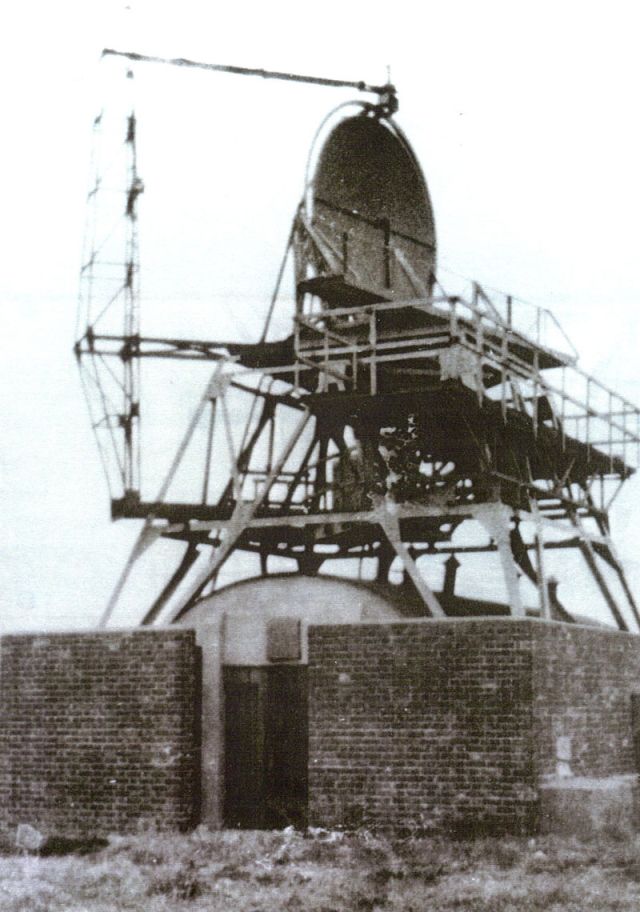
/When I was thirteen I went round delivering meat for Mr Scoble the butcher on Saturdays on a bike with a basket (like Granville in Open All Hours). On my way to Brownstone Farm I saw massive camouflaged caravans sprouting aerials and a number of RAF personnel in a small plot near the entrance to the farm drive. After a few months, a sentry was put on the lane to the left of the entrance of Coleton Fishacre and a camp was built there. There were a number of Nissen huts and in the middle a Nissen hut with a big rotating dish aerial on a tower above it and a blast wall surrounding it. The electric supply came from the substation at Wood Lane via an overhead cable which later also supplied the Brownstone gun site. There was no electric supply to Boohay until the 1950s.
One day in 1941 not long after I started work at 14, a barrage balloon broke loose from its position on the creek sidings and got tangled in Reservoir Field cutting off the supply to the Radar Station. We and the RAF balloon crew from Dartmouth managed to deflate it and get the important supply on again. One afternoon an unexploded bomb dropped on the Radar Station. In the evening we Civil Defence members had to search the surrounding fields as we were told the plane would have had three bombs. None was found. For a while after this the camp was guarded by the RAF Regiment with Daimler armoured cars.
I remember the regiment had a very good dance band. They played at dances in the Kingswear Hall and probably in Brixham. The camp was finally closed in the 1950s and the only connection I had with it later was in organising the Coronation Beacon in 1953. There were not then many traces left.
Thanks to efforts by Reg to find more about the Station, details of the types of equipment used while it was in operation have been made available by the RAF. It provided radar cover for Lyme Bay, the Channel and Start Bay, giving 360 degree views with a 90mile range and could detect aircraft up to a height of 15,000ft. In early 1943, it was one of the first stations in the country to receive special radars to protect against low flying aircraft.
Reg has also led the discussions between the Historians and the National Trust for a notice to be placed at Coleton Camp in remembrance of The Wartime Site of RAF Kingswear.
Kingswear Houses
Kingston Farm Cottages – Northside Cottages – Higher Backside by David Williams
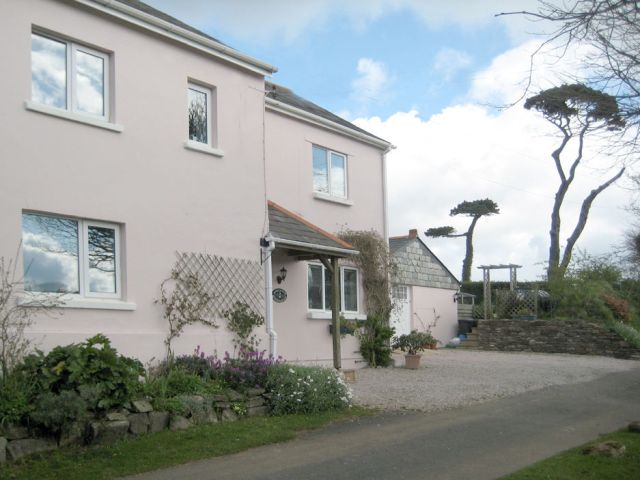
As you drive towards Coleton Fishacre, in the final dip in the road before the gates of the National Trust property, there is a lane to the right signed ‘Kingston Farm’. At the end of this lane lies Kingston Farm, a splendid farmhouse built in about 1750. The four farm cottages act as a sentinel to the farmhouse itself. Numbers 1 and 2 are relatively new being built in about 1905. They are on the left of the lane as you turn in. They were acquired by the Nethway Estate in 1954 and are still let by that estate. Numbers 3 and 4 are on the right just before Kingston Springs Farm, originally a cattle and grain store for the farm. Kingston Farm was mainly farmed by tenant farmers and the cottages tied to the farm as dwellings for the agricultural labourers. This can be followed through the censuses as far back as 1841. Older records, however, suggest that there has been habitation at Kingston since at least 1170 and probably very much before. It is quite probable that the birth of Kingswear was as an ‘overspill’ from Kingston.
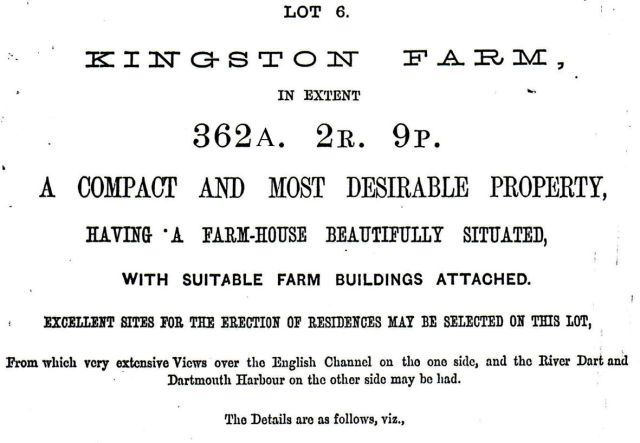
The name of the Fownes Luttrell family will be very familiar. They owned large amounts of land in the area which they put up for sale in July 1874. Lot 6, the Kingston Estate, was described as a farm of 362acres and ‘a compact and most desirable property having a farmhouse beautifully situated with suitable a r p farm buildings attached’. It was not sold at the auction, apparently failing to reach its reserve.
George Fownes Luttrell sold the farm to William Mitchelmore, a butcher from Dartmouth, on 9 July of the next year for £11,900. He borrowed £8,000 as a mortgage from Rev Septimus Cox Holmes Hansard, a clergyman from Bethnal Green, and from Sir John St George of Cornwall Gardens, Middlesex, described as a Major General in Her Majesty’s Army. The farm then passed through the hands of the Glendinning family to a Thomas Lakeman. He was a maltster and brewer of Brixham. His daughter, Ethel Tivy, eventually sold the farm in the early 1950s to the Hannaford family. The size of the estate rapidly diminished at this time with adjacent farms acquiring many of the fields.
Throughout this period it has been possible to trace many of the occupants of our cottage from the census returns. For instance, in 1841 John, Mary, Robert and William Lee were resident together with Laura Foal. John was an agricultural labourer working for Thomas Eales the tenant of Kingston Farm at that time.
Disaster struck the cottages on 23 October 1885 when a hayrick adjacent to the houses caught fire. This was discovered late at night, and although the Brixham fire engine ‘speedily arrived’, the cottages were destroyed. The occupants were cared for by Mrs Llewellyn of Nethway House who publicly thanked, via the Dartmouth Chronicle, the many donors of money and clothes. The cottages were then rebuilt, essentially as 2 up 2 down houses, with an outside earth privy. How did the Rundle family, in residence for the 1901 census, squeeze their whole family in; William 37 and Sarah 38 had seven children? Ettie and Edith were 12 and 10; William was the eldest boy at 17 whilst Arthur was only 9 months old on census night. Thomas Cole, 79, also lived with them and was described as ‘father-in-law’.
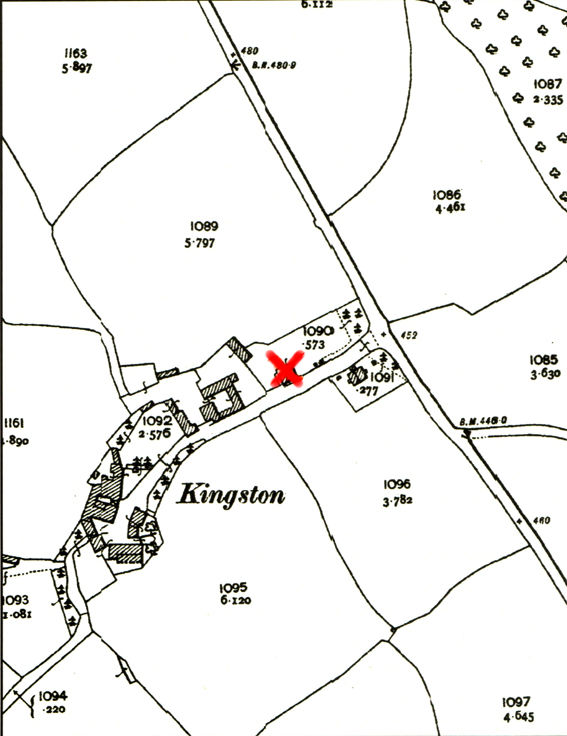
Cottages number 3 and 4 were finally sold off from the farm in the 1980s. Both were Map of 1906 showing Higher Backside at X then extended sideways and backwards to their current proportions. At about this time they became Northside Cottages, logical as they lie on that side of the lane, but both have been renamed again. A study of the maps associated with the sale of 1874 shows that all the fields were named. That behind No4 is Wimbeck, whilst our paddock is called Higher Backside.

Extract from the 1901 census
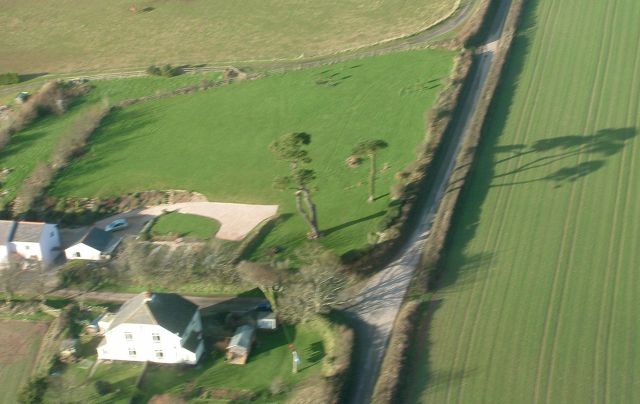
In January 2006 I took this aerial photograph which shows our two large Scots pines and the extent of our curtilage. Together with some landscaping, we have been able to reshape the vegetable and flower garden, as well as plant many young Monterey pines, whitebeams, rowans and numerous hawthorns.
It is hoped to produce a fuller story of Kingston Farm and its cottages in the near future as another in the series of Kingswear Historians booklets.
From ‘The Long White Cloud’
The last of his memories of Kingswear from Frank Andrews in New Zealand
Our last Newsletter included the first half of a long letter from Frank with his memories of the wreck of the Invermoor and other ‘happenings’ in the river. In this second half, he recalls people and houses in Bridge Road. Very sadly, failing eyesight may now make further letters too difficult for him.
Dear Historians,
Reading the story of Killiney in the newsletter, I wondered whether Mike and Jan Trevorrow had any links with the Trevorrows who used to live at Coombe Cottage, the lovely thatched house in Bridge Road. I do not know when this house was built but there were already seven houses in being along the private road in 1938 and I assume these building plots had been purchased from Fred Roberts’ predecessor in the Hoodown Development Plan. On the corner site above the road was Westering, self built by William Hollows, a retired pharmacist from Lancashire. On the lower side of the road on the corner was Edenholme (Commander Pillar), then Keelson (Mr Alec Philip) and Coombe Cottage (Mr Tom Simpson). There was then a gap of about a hundred yards to the south of Coombe Cottage and I was told that this piece of land could not be Keelson. Water rates now became a reality of modern living – we had not paid Fred Roberts anything and only peanuts to Walter Varney! The houses were also served by a main sewer which ran along in front of them to a large septic tank built into the hillside above Ganger Ball’s cottage, later the home of Maurice Ashton and family. At that time Hoodown came under the Brixham Rural District Council and when the septic tank began leaking all the residents were sent an Abatement of Nuisance Order instructing them to reconstruct it at our own expense. There followed a legal battle as to whose responsibility it was to maintain the tank and the Council finally took it over and did the repairs.
There might have been one more house built along the private road when Mr Bob Langtry bought a plot to the south of ours; he called it Little Portion and obtained planning permission to build a residence there. For some reason he was not able to start building within the planning time scale and the permission lapsed and was not renewed. Bob Langtry put in many hours of work there building stone walls and terraces and planting fruit trees and I expect there are still traces of this hidden in the undergrowth. There is one other fine house on the Hoodown Estate – Rocks was built high up on the hillside for Mr Carr, the founder of Carr’s biscuits – and he lived aloof there for several years. During his tenure many exotic trees were planted in the grounds and I expect some of them still survive. Subsequent owners of Rocks were the Vigurs, the Plumsteads and the Thompsons.
All the older houses along the private road had paths, steps and gates giving access to Bridge Road but in the years before we built, the Preventive of Ribbon Development Act had been passed which precluded any new access on to the main road. The BRDC told us that all future houses would have to share steps cut up across the steep bank from the road as a common access. We were not happy about this as the steps were crumbling and unstable and after much badgering the council built a stone retaining wall with a hand rail and I maintained this access and kept it clear for years until the National Trust took it over.
In the corner of the field just above this right-of-way, when turning up ground for a vegetable patch I came across some rudimentary dry stone walling and someone said that a Capt. Melville of Kingswear once had a piggery there. Other interesting things I unearthed were a 3inch cannon ball and several brass cartridge cases. There used to be a large Nissen hut there too, put there by the Admiralty at the time they built the concrete reservoir before D-Day and for years after the war my family used it for storage and workshop until it was demolished by the SHDC to make way for the public toilets.
I could go on and on about Britannia Halt, Ferry Rock Cottage, the American occupation, Higher Ferry incidents etc., but will burden you no further. Memories of the Hillhead years would fill a tome and I feel sure that my ghost will haunt the houses built on the place where I toiled and sweated and shivered and enthused and despaired all those years ago.
Ah well!
Best wishes.
Wartime Life at Kingswear School
by Michael Stevens
It started when May Watts, who now lives in Australia but regularly looks at the Kingswear website, sent me a short story about an incident when she was a pupil at Kingswear Primary School during the Second World War. Other ex-pats soon added their own accounts and it grew like Topsy. The contributors’ email addresses are included and they would be pleased to hear from anyone who used to know them. • Peter and May Watts (nee Crisp) (insane2@bigpond.net.au) are now living in Brisbane, Australia. Miss Hayward was the school headmistress during the war and sent May and Margaret Rowe (now Fabian) out to collect books for the Red Cross. After visiting various homes in ‘Lighthouse Beach Road’ (Beacon Road) they called at one house ‘Yarrow Bank’ which had an excellent view of the river. It seems that the owners were two missionaries, a brother and sister recently returned from Africa because of the war and ‘wanting to do their bit back in England’. The girls were invited indoors to tell the occupants the reason why they wanted the books.
They were given many books but before they were handed over, the ex-missionaries insisted that all four of them kneel down and say (somewhat lengthy) prayers for the eventual recipients of the books. In all, the school collected 430 books for the Red Cross.
• Jim Austin (gentleman_jim34@yahoo.com.au) used to walk his pet dogs to the missionaries’ house with its fabulous view of the river (now lost through later development).
He used to stand there and watch the boom ship by the castle admitting shipping into the river.
Whilst there, he once saw a sea battle on the horizon and another time saw a large American ship towed into the harbour with half its side missing. Jim attended the school from approximately 1943 to 1945. He lived at the Steam Packet Inn in Fore Street during and immediately after the war and for the last 30 years has lived in Sydney.
• Barry Westcott (B.Westcott@kpnplanet,nl) was born in Paignton but moved to Kingswear when a baby. His father and mother lived in Grange Cottage, working for Mr and Mrs Jones of The Grange, and every day Barry had to walk from there to school. When the high road was closed by the army when the AA guns were being used, he had to go via Millbay Cove where there was a small minefield. He used to like playing near Millbay Cove until his mother found out. Sometimes he had to go with an army escort from the White House to the Post Office. Later he stayed with his grandmother Mrs Gunning or his aunt Mrs Bovey. In the war the young boys spent more time thinking about the army, air force and aircraft than they did about reading and could tell every type of warship. Miss Heywood (sic) used to remonstrate with them but ‘it did not help very much’. Barry is now living in the town of Nijmegen, Holland with his Dutch wife Gerdie.
• Michael Short (m.short@mypostoffice.co.uk) lived in Kingswear with his grandmother at 3 Jubilee Terrace until about 1946. He can remember the ARP Wardens coming to the school to show how to use a stirrup pump to put out a fire and the Morrison shelters in the school hall. He and May Crisp were appointed ‘Emergency Children’ by Miss Hayward and instructed what to do in times of emergency, i.e. air raids. Their instructions were quite simple.
Miss Hayward would simply shout ‘EMERGENCY!!!’, whereupon all the children would leap to their feet and May and Michael would then lead them down the path to the air raid shelter in Lower Contour Road.
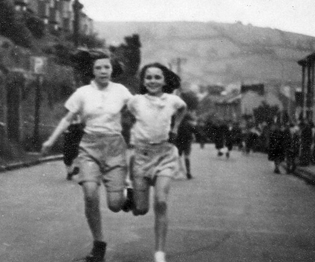
During the war a large number of evacuees arrived in Kingswear, many of them with their mothers. They also had a couple of their own teachers. One was quite eccentric. It seems that one day this teacher started to attack Miss Hayward with a pen, the old type with a sharp nib. She grabbed Miss Hayward and threatened to stab her in the neck. Miss Hayward shouted ‘EMERGENCY and get Mr Wedlake’ (The previous Head Teacher who lived opposite on the May Crisp (right) at VE Day celebrations in the three-same side of the road as Mr Fairweather’s garage legged race and was then a School Governor. He died in 1946 aged 77). May immediately escorted all the girls and Michael all the boys down to the shelter and fetched Mr Wedlake. The poor old boy rushed up to the school still in his pyjama trousers to deal with the matter. May Crisp remembers seeing the assistant teacher going berserk in the playground, walking around with her arms outstretched. She was not seen again!
Meetings
by David Evans
Subjects covered by speakers at our nine meetings this year in the Village Hall have ranged from the Tin Industry on Dartmoor to Brixham Pilots and included the following in March and May.
31 March Neville Oldham: Pirate Gold: Exploring the Wreck of a Barbary Coast Ship
Neville Oldham is a member of the South West Maritime Archaeological Group and described the exploration of a wreck found in the early 1990s off the Gara rock near Salcombe. Painstaking examination and measurement of the site had found an anchor, several cannons and a large quantity of the bar-shot used for destroying an enemy’s rigging but no remains of a ship,
However, in the spring of 1995 one of the team caught sight of a gleam of gold in a crevice which proved to be a finger ingot. This was the start of the discovery of a hoard of 550 Moroccan gold coins, the largest amount found until now in Europe, together with more finger ingots and quantities of jewellery. Some of the coins were engraved with verses from the Koran. The discovery was kept secret to prevent the looting of the site, with work continuing to try to establish the nature of the wreck. Although not proven, the position of the anchor and of the cannons suggests it may have been one of the long, fast Barbary Coast ships which were raiding along the South West coast on the 1600s and capturing men and women to be sold as slaves. The site was designated a protected one in October 1997 and in 1999 all of the gold, jewellery and other finds were sold to the British Museum. This gave rise to considerable publicity in the press, television and radio and was featured in a BBC Timewatch programme White Slaves, Pirate Gold in January 2003, he ended his talk with stories of the fate of some of the unfortunate captives carried by Barbary pirates and taken to Morocco for sale in the markets.
26 May Chris Ryan: Hoodown and the Kingswear Golf Club
In his presentation, Chris Ryan described how and why he went about writing his book A Short History of Local Golf and the Dartmouth and Kingswear Golf Club, collecting together piece by piece new information and contacting those with memories of how it all happened.
The starting point was the purchase in 1882 by Richard John Roberts of the 200acre Hoodown Farm, formerly part of the Fownes Luttrell estate. Attempts to develop the land on the riverside facing Dartmouth for building plots proved unsuccessful, as had similar ones in the 1860s.
He died in 1895, leaving his widow with their large family including two sons, Richard and Alfred (Fred).
Little changed until Fred returned from the Great War.
He built the house Uplands on Hoodown in 1921 and in 1923 constructed a sawmill at Waterhead Creek.
He also bought extra land between the Kingswear Cemetery and the Higher Ferry for residential development, linked to the proposal for a road bridge across to Sandquay. This did not succeed, limiting sales to a few plots at the end of Bridge Road.
However, Fred became convinced that growth of local tourism could be advanced by a golf course. With a business architect colleague, he had the dream of developing a ‘country club’ at Hoodown with facilities for golf, tennis, fishing and shooting and a fine clubhouse on the hill where well-heeled guests could be entertained and fed after a good day’s sport. Despite the failures of nearby local golf clubs at Torquay and Thurlestone, he pushed ahead with the construction of an 18 hole course; the main problem was that because of the hilly nature of the ground, the fairways had to be cut across and not down the prevailing slopes.
An experienced professional, Eddie Pocock, was appointed and after just over a year of preparation and construction, the course and clubhouse were ready for the official opening on 19 July, 1935, although only twelve holes had been completed and no more capital was available.
What happened after the grand opening remains something of a mystery. Three years later the farm, golf course and building estate were unsuccessfully put up for auction in June 1938 but were not finally sold by Fred until September !945.
A vital source of information was Fred’s son, John Roberts, who lived at Uplands until 1937 and letters from him describing his years on Hoodown have now been brought together by Chris in a leaflet to accompany his book.
 Kingswear Historians