
First I had a Dog

Ian Giles & Raq in 1954 – “I was age 16 and without a care in the world” !
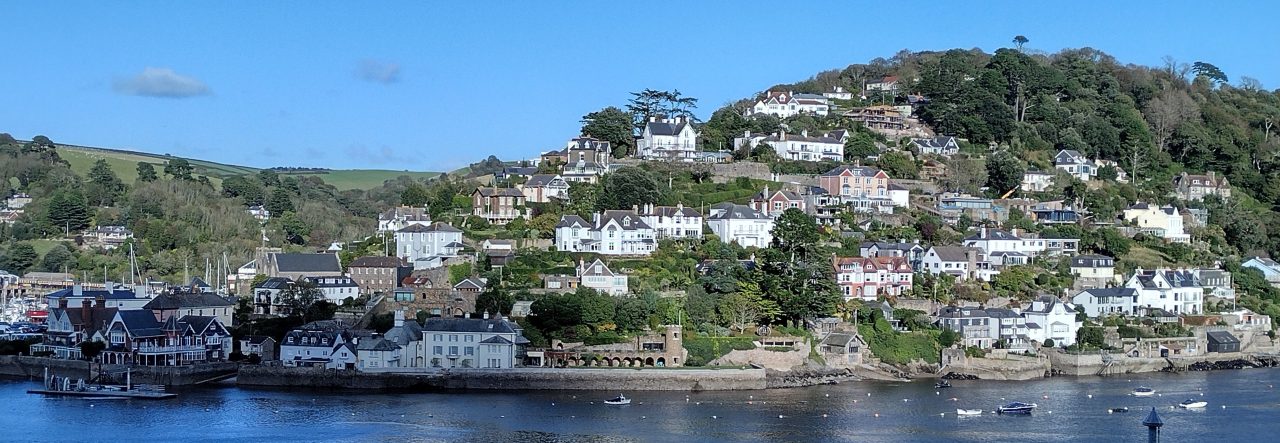
He was only a few weeks old when he came to us, my mother had got to know about him and thought he was just the thing I needed to cheer me up. I was fourteen years of age and had not long moved home; my parents had decided to live in Devon and it was to the seaside town of Dartmouth we were to make a new life. My father had bought a village shop across the river Dart at a place called Kingswear. It was the middle of the schools’ summer holidays and I was not adjusting very well to my new surroundings, my parents said I was homesick.
Out of the blue I found I was sharing my new home with a sandy haired, roly-poly bundle of puppy flesh. I had no idea my mother had been thinking about a pet as a companion for me, so I was completely baffled when he turned up. Not having any previous experience with dogs, I treated it as a curiosity object more than a pet. As it started to grow it became noticeable the dog’s feet were big, well out of proportion with the rest of his body. My dad assured us in a worldly manner, that this was a sure sign he was going to be a big dog, all of which seemed perfectly logical to me. Needless to say the dog turned out to be a normal, medium size mongrel terrier; we all breathed a sigh of relief, at not having a long legged wolfhound bounding about the place.
Unbeknown to me, my mother had already thought of its name, he was to be called Raq. I thought what sort of a name is that; my mother went on to explain, she had read stories of a Romany family and their dog was called Raq; she really must have enjoyed the tales in the book because she would not brook any opposition, there was to be no debate. So Raq it was! It took some time for Raq and me to become firm friends, but when we did, we were inseparable, I can never remember training him to do anything; he just seemed to know what was required of him and did it!
I could take him anywhere and he would be right at my side, if he did start to wander or outpace me, one look at my body language and he would fall back into step, it was the same with everything. There were moments however, when he did his own thing, especially when getting off the ferry; he had a tendency to want to jump off before the boat had docked. I remember one trip on the ‘Mew’, when it was approaching the Dartmouth pontoon to disembark its passengers. With the boat still several feet away from landing, the dog took a flying leap off the boat. He must have misjudged the distance because he missed his landing and started to slide down the side, toward the water. Luckily, he just managed to cling on to a rope fender, which was halfway down. With two hundred tons of steam ferry closing in rapidly; the dog frantically scrambled his way back to the top, just in time to skip out of the way as the ship hit the side. I stood rooted to the spot, looking round, I could see the rest of the passengers were looking exactly the same as me.
“The Mew” was a steam driven ship of about tug size, it could take up to eight cars or so. It had reigned supreme on the railway ferry service since the early 1900’s but it was ponderous and slow, and taken out of service some time in 1954. Its successor was a purpose built, passenger only ferry and was powered by diesel.
* I remember the Mew crew were Dusty Miller, Paddy Barden, Roy ??
After school each day, I would race home and get changed into jeans and plimsolls, call the dog and set off for my dad’s shop to deliver the evening papers; dashing through the town to the embankment to catch the ferry. There were three different ferries to choose from, the railway ferry which I have just described, or the corporation run ferry, which was a much quicker and smaller boat for passengers only, and finally, a car and passenger ferry, which was essentially a floating platform towed by a powerful diesel tug. On arrival at the embankment (Quayside) a quick appraisal of the ferry situation would be called for, if in a hurry I would discount the ‘Mew’ as being too slow, it would have be one of the remaining two, their relative positions on the river being all important as to which one would arrive and depart first. This guessing game did not always work out correctly, much to my annoyance. Usually, it was the corporation’s passenger boat, which got my vote. It was about twenty feet long with a cosy cabin amidships; at the back was the driver’s cabin. It was highly maneuverable and could be the other side in about three minutes, the cost, for the single journey, one old penny. I cannot ever recall paying for the dog. If there was a swell coming in from the sea, the boat would roll and pitch, sometimes spray would drench you if you were not fleet of foot. Really, for a young boy it was quite adventurous
The Ferry crew consisted of Don and Ken Langworthy, their father Bill, George Ash, Basil ? George Bailey, Jim Davies (others, whose faces I see, but have no names).
I was beginning to like my new surroundings more and more, especially Kingswear, which for some reason, immediately felt comfortable. My previous home, though on a main road, had been on the outskirts of a medium sized Midlands industrial town; but here, within a relatively small area, was a mixture of town, village, river, country and sea, a combination which, definitely had appeal. Raq and me would collect our papers from the shop, and hare round to see how fast we could complete the deliveries. By the time I had returned from delivering out at Riversea, It would usually coincide with the leaving of the special school bus to Brixham. If I remember correctly, it was a private bus company run by a Mr Geddes, who was also the driver. I would lean on the wall and watch the school bus perform the ritual of reversing under the railway arch, the confines of the Square making this process difficult, especially in summertime with holiday traffic. On completion, the kids would board the bus and Mr Geddes would get in the drivers seat, a grinding of gears and the bus would move off; as they passed the village hall I would give them a wave. This is what I liked about this place, being situated on a steep hillside, no matter where you were; there was always something to see, boats on the river, the railway station, people coming off the ferry. No matter where you looked, there was panoramic views, either out towards the mouth of the river and sea; or across to Dartmouth or up the river. I never tired of just looking about me; there was so much going on.
I was only a boy, but even then, I sensed I was experiencing a way of life that had not changed much in many years; I also sensed, that in a few short years, things would change. Looking back, I feel I was lucky to be part of such a way of life. It was such a close-knit community, if you didn’t know everyone by name there was a fair chance you knew them by sight, or where they lived or worked. It was a microcosm of the world itself; where well defined class divisions, working within the discipline of the social values of the times, to me, all added up to witnessing the passing of the Victorian way of life, which is not surprising really, as anyone over the age of fifty was born in the reign of Queen Victoria.
There were a number local of shops, such as in the Square, by the ferry, there was the Post Office (Ms Strickland), Tobacconist and Fancy Goods (my dad’s, Les Giles, shop), Chemists shop ( Mrs Andrews), Bakery and Cafe (Stanlieks). In Fore Street, a Clothes shop (Mr Hunt), Butchers (Mr Scoble), Dairy (Murrin’s), Grocers (Hawkes), Garage (Fairweather) – all these establishments privately owned, and providing a local personal service. I don’t know whether it’s an illusion, but in those days there seemed more local people living in the village. Now, I get the feeling that this is no longer so; and the bulk of the people are from outside, especially retired professional people with boats. The railway, for example used to employ over fifty people, all of them local, mostly living in the village itself. There was a shipyard up the river, at Noss Works with sufficient local people working there, to merit a Halt at Britannia Crossing, I well remember, several workers going to work there on the 7.0 o’clock morning train. On the 8.05 am train it was noticeable, even then, that quite a few people would work (up the line) in the Torbay Area. Undoubtedly, the most sweeping change I notice, is the increase in tourism, with its attendant road traffic problems; with practically all local industry, geared to serving its’ needs. Of course, this was nothing new, it was just the scale of it all.
Railway Workers
Station Masters – R Bovey & L Nicholls
Station Foreman – Percy Wadham
Ticket Collectors – Wilf Wotten, Ed Trickey, Norman Jones,
Porters – Bill Bearman, Albert Phillips, Charlie Hamblyn, Dick Buller,
Signalmen – Parry Marshall, Reg Selway,
Shunter – Di Thomas
Examiner – Jim Breeze
Crane Drivers – Bert Smith
Porters – Ralph ? (?) (Both from Brixham)
Carriage Cleaners – Bert Brown, Bill Knapman, M Ellis, Rundle, Smith (twin of crane driver Smith), Moran (Scotsman),
Packers – Harry Battershall, ‘Count’ Knapman, Ruben Memory, Walter Pollard,
Staff – John Polyblank, Fred Didsbury, Bill Penwarden,
Book Stall – Bill Kelland
After about a year, we moved from Dartmouth to a small cottage near my dad’s shop (Alma Steps), for all of us it was more convenient, for by now I had left school and got a job as a booking clerk on the railway station, which, was literally a stone throw away; as was the church and two pubs. It was also more convenient for my dog, as our new home was in a quiet backwater and near to our favourite walks. Outside the cottage door, turn left and up a dozen or so steps and we would be on the road which leads eventually to the sea, about a mile and a half distant; it was also the road to my friends house at Millbay and a place called “The Warren”. I have written many words elsewhere about this area, suffice to say, it was a dogs paradise. The number of times my dog and me walked this road, must be counted in hundreds, I never tired of it, and I’m sure Raq didn’t either.
I’d open the door a fraction and squeeze through, knowing full well my dog, somehow, has got through with me; still close behind up the steps to the top, there the dog would sit; he knew instinctively if he was not welcome on my travels; if told to go home he would remain sitting looking a very sad dog indeed. I would start walking away, thirty paces on I would look over my shoulder; he would still be sat motionless with head on one side looking so forlorn. With each stride the distance between us becomes greater, one hundred yards now, I look over my shoulder and he’s still there, not being able to bear the sad look on his face any longer, I would shout, “come on then” at which, his face would light up instantly and bound forward at breakneck speed to join me. Very rarely was I harsh enough to tell him to go home.
The Warren was about two mile distant from our cottage; just the place to take dog on an evening run, for this was Mecca for any self-respecting dog, hell bent on exploring. When we got to the steep cliffs he would soon present me with a piece of branch or log, imploring me to send it hurtling down the steep side into the young pines. Sometimes the branch or log would be quite heavy, and after a lengthy absence he would stagger back with the retrieved object, only to repeat the process all over again. The pine needles hereabouts were inches deep, having lain for ages; to see my dog furiously burrowing and scratching out a shower of needles for several feet behind him; was hilarious.
I had a boat, and Raq was a natural sea dog, his favourite position was in the bow, nose pointed upward at a jaunty angle, keenly sniffing the salt spray. In the Spring my boat would be ready for me to use, as in other things, messing about in my boat was shared with my dog; and for the few short weeks of Summer we will be out on the river. Messing about in boats is just that; not going anywhere in particular, round to a cove or beach, a trip on the river, or drop anchor and fish, sunbathe or swim. It all added up to passing the sunny days away, messing about. My boat was an eleven foot dinghy with an outboard motor, it was kept in the river, off the railway embankment by the footbridge. I would go down, with the dog and get the boat out, with nothing more in mind than having a trip round the harbour.
In those days there was regularly presence flotilla of five RN destroyers or frigates moored in the middle of the river, they provided quite a site and I would go out and have a closer look; or I would go further up river where there was, for several years, quite a few deep sea cargo vessels laid up. One day, I went a further up river than I had previously ventured; all of a sudden the boats momentum abruptly ceased and I was catapulted forward quite violently, similarly the dog, only he shot over the side. We had run aground; shaken, I looked around to see what had happened, looking into the water, I saw to my astonishment there was only a foot of water under the boat, I was stranded on a mud bank in the middle of the river. With the aid of an oar, and much pushing and cursing, I managed to find deeper water and starting the motor I went in pursuit of my dog; thankfully I caught up with him without grounding again, I hauled him aboard none the worse for his ordeal. This episode taught me a salutary lesson; treat the river (and sea) with the utmost respect; and study the waters and tides before setting out.
For the next two summers, life continued in a similar fashion, but by that time, clouds were gathering, telling me time was running out. Soon I would be eighteen and have to leave home for my National Service. I didn’t know why, but I instinctively knew things would change, somehow it would mean goodbye forever, to this way of life.
For the dog to suddenly find, one day I had gone, must have been devastating and miserable, for I had at last, left home for my National Service. It has grieved me since that, at the time, I never gave my dog a thought, indicating perhaps, more pressing thoughts on my mind. It consoles me now however, that my dad took over my duties and took him for walks and exercise, but it couldn’t have been the same for him, and it never was. My mother used to tell me, whenever I came home on leave, the dog instinctively knew I was coming, certainly the frenzied welcome he always gave me suggested this was true. I would like to think so, anyway.
Two years later and ten years older I returned home. I could not settle, life was not the same, I was restless; my interests lay elsewhere, and it was inevitable my life was about to change. Soon my parents moved home again and several more times after that, by which time I had set up my own home, back in the Midlands; my dog was now a thing of the past. Whenever I visited my parents, Raq and I would be briefly reunited, but he was no longer the dog I knew; for he too, was getting older. I knew that in his dog youth I had given him a wonderful life, and in return, he gave me his companionship and unstinting devotion. He died of a heart attack in Dobwalls, near Liskeard, it was 1962, he was aged 8years.
My parents say he died from a weak heart due to the strenuous life style of his early years, if I was asked was it worth it? My answer would be a resounding yes.
By Ian Giles
 Kingswear Historians