
Off I Go To Join The RAF by Ian Giles – the story of an 18 year old called up for National Service in the late 1950s
Note from the Author
My RAF National Service days are difficult to categorise as to suitability for general consumption. I recorded my RAF days more or less the same as everything else, in the form of a diary/biography. Maybe it’s hard for young kids these days to imagine that one was whisked away by the government of the day to do whatever they liked with you for two years. All at the tender age of 18. So that’s how I wrote about it, where it took me and who I met. I suppose on balance I say more about my non service activity than on the job so to speak.
Anyway yurr tiz…..
Ian Giles – note the Elvis quiff – c1958
Off I Go To Join The RAF
I was restless, my eighteenth birthday (1956) had come and gone, I was expecting to hear at any moment where and when I was to report for my National Service, as it was decreed by the government of the day, that all male persons over the age of eighteen, fit enough to serve their country, will do so for a term of two years.
The powers that be, already knew my preferred arm of the service was the RAF, simply because I did not fancy the Army type discipline or way of life; similarly, the Navy, the idea of being cooped up aboard ship for weeks on end at sea did not appeal either. I had always had an interest in the RAF so it was no contest really where my preferred choice would be.
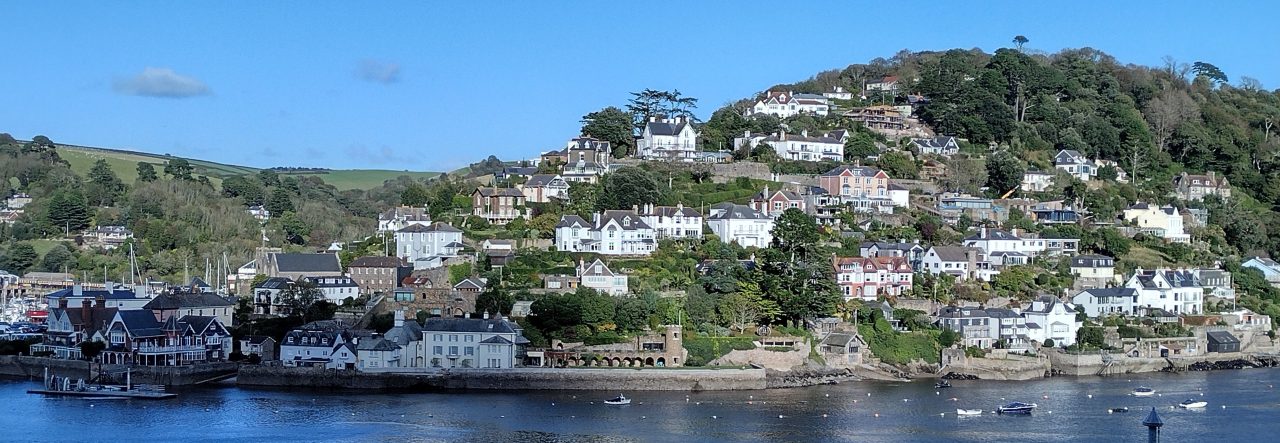
The buff correspondence duly arrived, directing me to report for a medical examination at an address in Plymouth. Sitting aboard the top deck of a green Western National bus, I looked out over Dartmouth as the bus wound its way on the first stage of my journey, a journey that in reality would absorb two years of my life. The journey to Plymouth is both pleasant and spectacular; as the route travels along a coastline with splendid views of headland and sea; picturesque villages dotting the way.
Reporting to the address, which turned out to be a block of buildings in the centre of the city, I found myself in a world of people walking around in white coats. I was instructed to undress and submit my anonymous body to a series of inquisitive proddings and tests, performed by equally anonymous doctors and nurses. After an what seemed like an age, I was duly released and presumably pronounced fit for duties, because a few days later, another buff envelope arrived directing me to report to RAF Cardington in Bedfordshire. I was to travel by rail from Plymouth with a group of enlisted men from the surrounding area, which included chaps from Cornwall. I was pleased when I learned that the train, upon which we were to travel to London, was the famed Cornish Riviera Express.
In London our arrival was at Paddington and then by underground to St Pancras, where we would catch the Bedford train. This was my first experience of London and it was interesting to see the commuters in their bowler hats and carrying umbrella and brief case, just as depicted in many films. The journey from St Pancras to Bedford was exactly one hour; an RAF coach then took us on to the Reception Camp, RAF Cardington. The most memorable thing about this unmemorable place was a whale like barrage balloon, wallowing limply over the station. We were shown to our billet and then to the cookhouse for a late meal, as by then it was late evening time.
The serious business started the following day; I had expressed an interest in becoming a member of the air sea rescue service, which at that time was still operating with high-speed boats. The authorities knew this and insisted that the minimum engagement was a period of nine years. I tried very hard to persuade them to take me on for my National Service with a promise of enlisting for a longer period if I found I liked it. Of course they would not entertain the idea so we parted company and I returned home to await my fate, only this time I would have to take pot-luck with whatever they offered me. As for the group I had briefly got to know, I never set eyes on them again.
Very soon, I was once more on my way to Cardington, the balloon still looking like a stranded whale on the end of its’ rope high above the station. With an assortment of other chaps, who had drifted in from all over, we started on the process of being processed. This place was the reception camp for all new recruits entering the RAF; its main function was to provide all new clothing and equipment in order to survive life, in my case, for the next two years. On completion of receiving our new kit, the ‘system’ demanded we parcel up our civilian gear in brown paper and post it home. Whether by design or accident, this severing of all contact with our previous existence had the most demoralising effect.
A carton of sandwiches and an apple were issued to all personnel, along with the instructions for the journey to our next destination, RAF Basic Training Camp, Padgate, near Warrington, Lancashire. We were marched off to the camps’ railway sidings to board the waiting train; soon we were on our way. As the train gathered speed, I reflected on the fact I was following in the footsteps of my brother, who, only a few months previously, had taken exactly the same journey as I was now undertaking. Fortunately for me, this was the middle of summer, which would have a distinct advantage over my brother, who had to endure his basic training in the middle of a harsh English winter. Suffice to say we duly arrived at Warrington where we piled into three ton Bedford trucks for the journey to the camp. Packed like sardines under the canvas of the truck with all our equipment and kitbags, we were blind to the outside world, it was only the speed and sounds we heard that indicated we had entered a huge hangar type building.
Then all hell let loose! Screaming voices accompanied by loud thumping on the sides of the trucks left us in no doubt we had, indeed arrived. This was our first taste of what was to come, the tailgate was released and bodies came hurtling out on to the hangar floor, hats, kitbags, legs and feet, all thrashing about in the haste to obey the torrent of orders and abuse. I suppose I should have been scared stiff, but the sight of utter confusion before me almost had me in fits of laughter. Of course, laughter was not the intended aim of all this nonsense, so into line and look sharp about it. We were marched off to our new accommodation, hut number 232.
So started a process that millions of British men had embarked upon throughout history, over hundreds of years, the military establishment had honed to perfection every nuance, trick or otherwise, in dealing with inflicting unswerving obedience into the human soul. It became immediately apparent we had no rights, no individualism, and above all no right of redress or appeal, in other words we were there strictly for ‘their’ purposes to do whatever ‘they’ deemed necessary. I felt quite certain (and still do) that behind this facade, was a regime, which would, deemed necessary, resolutely crush any elements opposing or impeding its ethos or performance. I felt the only way to deal with this situation was to blend into the mass and remain as anonymous as possible
Actually I enjoyed the day-to-day physical activities of basic marching and drill. I surmised that being of average ability there would be nothing in the programme that I could not adequately deal with. By and large this proved to be the case, so sticking to my rules, time went by swiftly and reasonably smoothly. The basic pay was twenty six shillings a week (one pound thirty pence) and I managed to save over ten pounds during my stay there, as the only thing I spent money on was mainly cleaning materials. Very little time was spent off camp, as the only place to go was the town of Warrington, which had no great appeal anyway; besides, I was usually too tired to think about going out. Although it was the height of summer the weather was not very good as drill was frequently interrupted by heavy showers, which would soon flood the parade ground several inches deep in parts.
The course was to last for nearly twelve weeks. Soon the instructors moulded us into a team, we became as one, obeying instructions without hesitation, our bearing became military, clothing and equipment started to mould to our healthy fit bodies, the huts were maintained to a zealous and obsessive state of cleanliness. The treatment was irresistibly working; we had lost our individual identity and acquired a new one, we marched as one, we ate as one and we conformed as one.
The Drill Instructors were quite professional in their work, and ours had a great sense of humour – many times during parade ground drill, uncontrolled laughter would ensue a bawling out of some unfortunate transgressor for committing some unforgivable sin. It was to instructor’s credit that given the absolute powers they had, seldom did I see them abuse it, no doubt some did. All the exercise we were getting made us hungry, I’m glad to say the food was excellent, not haute cuisine perhaps but good wholesome fare, and plenty of it. It was now August and soon we would be on our way again, our intake, always the best of course, duly passed out and the notice board was eagerly scanned to see what destinations lay ahead. As for me, after a spot of well-deserved leave I was to report to RAF Hereford for my trade training as a storekeeper.
With my basic training behind me, I returned home for a couple of weeks leave before going on to start my trade training. By now it was September and an eventful summer was left behind, one morning I gathered my belongings and caught the 8.05am train from Kingswear to Hereford, a journey of six hours or so. At Churston station, which is the first station along the line, an airman stood on the platform waiting for the train to stop; he got in the carriage ahead of me and settled down for the journey. I could not help but wonder where he was going, but as the journey progressed my thoughts turned elsewhere and I forgot about him. The train was a “through train”, which meant I did not have to get out anywhere to change; the route was to Bristol and through the Severn Tunnel to Hereford. When the train approached Hereford I noticed the airman who had got on at Churston started to gather his things, I could see now that he too, was destined for Hereford. I found out later his name was Mike Buleigh from Brixham, he had completed his training at RAF Bridgenorth and was destined for the same trade course as me. In civilian life he was a gas fitter working in Brixham.
My job was to be a storekeeper / packer and it was here where I was to learn how to do it. The course was to last for six weeks, and upon completion I would be posted to a permanent station, hopefully to a flying station somewhere in East Anglia until I had completed my time. The pace of things here was much less hectic than at the previous camp, a congenial geordie (term for someone from Newcastle) Flight Sergeant of rare vintage; was our instructor and life proceeded at a gentle rate. The only thing here to upset an otherwise civilised life, was the presence of women military police, who, like all of their trade took a sadistic delight in making other peoples lives as uncomfortable as possible. The only way to avoid them was not to leave camp for any reason, thereby not going through the camp exits, which were of course controlled by MP’s. (Police)
However, one day, I did decide to run the gauntlet of the guardroom, this was because I had decided to hitch hike to nearby Ross-on-Wye to try and find an old school friend and pal of mine. It was now autumn, the countryside was at its best, the leaves like spun gold in the September sunlight. Standing by the roadside with the warmth of the sun on a gentle breeze, reinforced a complete sense of freedom I was feeling for the first time, I could not have had a more perfect day for my introduction to hitch hiking. My destination was Ross-on-Wye, which was some ten miles away. In the time honoured manner I raised my arm, and without a care, waited to see what chance held in store for me.
A steady stream of traffic, mainly private cars was making use of the fine weather. To my delight an obviously new, open topped Morris Minor car pulled up alongside, it contained a family of four inside, Mum, Dad and two small children. They asked where was I going, I told them I would like a lift to Ross if at all possible, the nice couple invited me to sit in the back with the children and off we sped. They told me they were going to Weston-Super-Mare and I was quite welcome to go with them if I wished. I thanked them profusely and said I would settle for Ross as I had planned my day, a little later we said our goodbyes and wished each other well.
Alone in the delightful market town of Ross-on-Wye, I planned my strategy for finding my friend. I had no idea where he lived, or indeed whether he still lived there at all! Suffice to say, after painstakingly asking here and there, I slowly but surely tracked down my prey. I first found the home of his parents who were pleased to see me and made me most welcome, the mother told me he didn’t live with them but he was living in town with his girl friend. This news gave me a jolt because I still thought of him as a small boy with whom I used to play. He too was doing his National Service in the Army, he was a Bren Gunner in the Duke of Cornwall Light Infantry, he was home on embarkation leave and I was lucky to catch him at home. His mother told me all this whilst waiting to see if she could get word to him to tell him I was there. He was not long in coming, and we were soon exchanging stories, for saying he had no idea I was looking for him the whole episode went off extremely well. It became time to leave; we said our goodbyes and promised to keep in touch. I returned to camp, strangely I have no memories of the return journey at all.
This pleasant interlude, which punctuated my time at RAF Hereford was the only thing of note to mark my stay there. Time progressed and along with a dozen others went on to complete our course. As far as I remember nearly the whole course was posted to No 16 MU RAF Stafford, in the Midlands not far from where I used to live. I was bitterly disappointed when I learned Stafford was to be my destiny, it was a far cry from a flying aerodrome which I so badly wanted to go. We all travelled together, Hereford to Shrewsbury, change for Stafford via Wellington. When we got to Stafford we caught a bus to the outskirts of town and then started to walk along the road, which led to the camp. It was a gloomy, dull grey day and my spirits matched that of the weather. Coming toward us was a solitary airman, as he got nearer we could see he was an “old timer”, I would guess being at least twenty five years of age, his well worn uniform contrasted starkly with our brand new best blues, his well filled kitbag balanced nonchalantly on his shoulder. Someone asked him where we should report on our arrival. He pointed down the road, indicating the main guardroom was about five hundred yards or so on the left. We thanked him and as a parting shot asked him where he was going? He told us he was going home as he had completed his tour of duty after five years. We all looked at each other, FIVE YEARS!! We turned and watched in silence as he walked on his way, already disappearing into the gathering gloom.
So this was to be my home for the next eighteen months; looking around it seemed a daunting prospect, the camp was a huge sprawling place set in not unpleasant countryside; located on the outskirts of the county town of Stafford. The planners had taken air warfare seriously as the camp’s different storage sites were spread out over a large area, well dispersed into the surrounding countryside, insurance against air attack. I was allocated to number four site which, luckily, was fairly close to the living quarters. The working day differed very little from any civilian job, we started at 8:30am and finished at 5:00pm. If any emergency occurred then this would be covered by a rota system. My mode of transport was my bike, which I took to camp at the earliest opportunity, as the distances to be covered were great.
I quickly settled down, finding company in such likeminded chaps as myself, a lot of them were from similar walks of life, reasonable working class lads, prepared to do their best, albeit in lack lustre circumstances; “roll on demob” being the code to surviving. There were three types of airmen on site, the regular airmen, national servicemen and a third sizeable category, the three-year men. These being longer stay national servicemen, usually for reasons of pay, and were pretty good types. It was most noticeable there was a large contingent of Scottish chaps on the camp, I was intrigued why this should be, but I never did figure out exactly why this was so.
During my first winter I contracted a severe bout of Asian flu’ of which there was a national epidemic. I had heard of dreadful tales experienced by people reporting to the sick bay on official sick parade, so I pleaded with my sergeant for permission to remain in my billet, for the duration. To his credit he agreed, fortunately I had the room at the end of the building, so remaining out of view of prying eyes. For several days I lay in a feverish condition unable to help myself or even get out of bed, I felt desperately ill. A close knit bunch of Scottish chaps from my billet had been aware of my plight from the start, and without any prompting or fuss they assumed the mantle of nursing me back to full health. In addition to their daily work they provided me with all my needs; they maintained the fire day and night, obtained food from the cookhouse and NAAFI and also medicines. Gradually I regained my strength and eventually returned to my duties; my admiration for those chaps knows no bounds, for what they did, without thought of reward or thanks, I am eternally grateful. Needless to say, to this day, I have a great regard for all things Scottish.
Daily social life on the camp was basic, there was a well-appointed cinema which showed up to date films, changing the programme perhaps three times a week. Sport was encouraged by the high ups, all the mainstream sports being catered for; naturally, being a large camp with a big population the standards were quite high, especially football and rugby. The only other facility of any note was the NAAFI, where food was sold at reasonable prices accompanied by music from the juke box, the strains of Elvis Presley’s “Jailhouse Rock”, still ringing loud in my memory. Any other activity must be sought off camp, usually in the town of Stafford itself. I found it such a drab place my visits there were very infrequent. Consequently, most airmen lived from weekend to weekend, fortunately for me, my former hometown of Burton was a short distance away and I went there whenever I could.
One day, out of the blue, I received a letter from my old friend whom I went to visit in Ross-on-Wye. It was a long friendly letter telling me all about his posting to of all places Jamaica, I was really pleased to hear from him.
I loved travel by rail or hitch hiking, even the depressing thought of returning to camp after a weekend would be tempered with the thought of the journey. Typically, I remember one Sunday night returning to camp from Devon when it was my intention to travel as far as Bristol by train and then catch a private motor coach which would then take me on to Stafford by road, arriving at about five am Monday morning. Perhaps this indicates what a big RAF Station Stafford was, because as far as I remember all the coach passengers were RAF types returning from weekend leave, in fact coaches from all over used to travel to Stafford on a Sunday night returning airmen back to camp. My train left at eight o’clock in the evening and arrived in Bristol about midnight when I left the train and dashed outside of the station to find the usual coach, it should have been waiting nearby in the approaches to the station. After much frantic searching there was no sign of it, which urgently begged the question, what was I going to? I had to make my mind up quickly.
A quick glance at my watch told me the train for the north, upon which I had just arrived, had not yet departed. I made an immediate decision to rejoin it and continue my journey to Crewe where, I could get a connection to Stafford. I quickly bought a ticket and boarded the train; even then I had time to spare as the train was scheduled to pick up mail and parcels before continuing its journey due to depart at around a quarter past midnight. As I have already mentioned the train’s eventual destination was the North of England and Scotland, the route being through the Severn tunnel to Hereford, Shrewsbury and Crewe, this had been the main route from the west of England to the North since the times of the GWR (Great Western Railway).
Travelling overnight for me was always a tiring business, mainly because I couldn’t really sleep, how I envied those who could fall asleep at the drop of a hat, me I would just sit slumped in my seat with my eyes closed neither asleep nor awake. On this particular occasion I remember I had a compartment all to myself and could stretch out comfortably, even so I didn’t sleep. At about 2:00am I got up to have look around and stretch my legs in the corridor, I pressed my face against the window so I could see outside into the night, it was a brilliant moonlit night, it was so bright I could see the shadows of engine’s smoke dancing speedily through neatly laid out rows of apple trees, for the train was travelling at speed through the cider county of Herefordshire. The sound of the exhaust from the Castle class locomotive cracked out over the sleeping countryside, it was moments such as these that made travelling for me a pleasant experience.
Throughout the night the train travelled north, Hereford and Shrewsbury came and went and at the awakening of a new dawn the train snaked its way into the approaches of Crewe station. This is where I was to change trains, gathering my things I stepped out of the warm fug of the carriage and stepped out on to the platform. The time was shortly after 4:00am, the grey streaks of dawn already evident, I gave an involuntary shiver as I turned up the collar of my greatcoat, the morning air was chill, to which my misty breath was testimony. Looking around I was taken aback at the scene of so much activity going on, it seemed totally out of keeping with the sleepy but businesslike arrival of my train. There were crowds of passengers about, and the reason to my delight was across the platform, a southbound Scottish overnight sleeper was taking a breather before continuing on its way to the capital. I found myself hastening to the business end of the London train as I was keen on finding out what type of engine it was, this entailed a long walk as the length of the train was extraordinary, I guessed and hoped it would be an ex LMS Coronation class locomotive, which were the elite of the West Coast Main Line. Needless to say I was as “pleased as punch” when this turned out to be correct, trouble is, damned if I can remember what the name of it was.
The scene on the platform was what railways to me was all about, people on the move. Many were in uniform like me, returning after a weekend like me, railway workers, passengers, coloured signal lights, heavy wooden trolleys being loaded and unloaded, mountains of newspapers, doors slamming, people in small groups drinking from steaming cups, all of this an island of activity in a sea of tranquil dawn. I was uncertain of the departure time of my train so did not dwell on observing the scene about me, however it turned out I had plenty of time as my train was not due to depart for another hour or more, getting into Stafford at 6:15am in plenty of time to get back to camp on time.
The standard RAF staff car in use at this time was the Standard Motors Vanguard, they were a common sight on the camp in Stafford, I think its fair to say whenever I got near one I would positively drool over there sumptuous lines and would dearly loved to have a ride in one, which all leads me to remember another journey. One night on my way home to Devon, I had passed through Bristol and was standing at the roadside waiting for a lift when this car drew alongside me, although it was dark, I could see it was a spanking new Vanguard and eagerly accepted the invitation to ‘hop in’. The driver was bound for Exeter and so I settled into the comfort of the bench seat and relaxed in the (to me) luxurious comfort of my dream car. Soon we were gliding effortlessly over the Bridgwater flats, by which time I had learned my host was a rugby player, (not surprising really as he was a big chap sporting a beard) and also seemingly, quite ‘well to do’. A few miles later there was a sudden commotion and grimacing coming from my driver who was writhing about and obviously in some distress, I immediately thought he was having a heart attack which in turn nearly gave me one as the car seemed to be getting out of control. With the car still travelling at a fair speed the driver eventually calmed down and sorted himself out, apologetically telling me he suffered from bouts of severe cramp in his legs and hoped he hadn’t startled me. What could I say? I could hardly say I’d nearly died of heart failure myself, so I lamely said no, I was ok, and thought that was the end of the matter. However, by the time we had gone through Bridgwater it had occurred two or three more times, albeit with not quite the severity as before, by this time it was quite embarrassing and I didn’t know what to say, quite frankly I was becoming alarmed and wanted out, thinking it was a sham and there was some ulterior motive behind it all. I was just about to make some excuse to get out when he asked me if I could drive. I replied I couldn’t and asked him why? He said if I could drive he would be grateful if I would take the wheel and drive him the remainder of the way to Exeter. Suddenly my fears evaporated as I could see he was sincere and he really had been suffering from severe cramp, you can imagine my disappointment at having to turn down the chance to drive my dream car. The remainder of the journey was without further incident, but I remember it well and always will.
One summer evening, whilst out cycling from camp, I was pleasantly surprised to discover the Trent and Mersey canal running through the nearby village of Sandon. I was immediately attracted to this literal backwater, as it was set in quiet pastoral countryside, just the sort of place I needed to get away from the drabness of camp life. I must have spoken to someone fishing in the canal, because as I returned to camp, I promised myself on my next visit to bring my own fishing tackle with me. It must have been late in my second year at Stafford when I discovered this haven of peace, consequently I didn’t have many opportunities to take advantage of this tranquil hideaway, as I would soon be leaving the RAF. This was a pity, because I was keen on fishing and this was a good place to fish. Over the years I still go over to Stafford and visit this pleasant spot; it remains almost unchanged except it is busier with both road traffic and leisure craft activity.
Reading through these pages I note I say very little about my work, I find this understandable as I considered my work very mundane, although not boring because there were too many ‘characters’ around me to be bored. (including Eddie from Whitley Bay who could mimic Little Richard to perfection) However, No16 Maintenance Unit Stafford was probably the largest storage facility in the RAF; as I started out by saying, it was an enormous place and well spread out into the surrounding countryside for miles around. There were sites which were essentially self contained units in themselves, each one being responsible for storing a range of goods from say, a bicycle pump to a crated jet engine for a fighter plane. One of the sites I worked on held spares for the V bomber squadrons and I was severely brassed off one sports afternoon when at the last minute I was ordered to load a tail section of a Vulcan Bomber on to a railway wagon and arrange for its despatch to an airfield somewhere in England. This was in response to a VOG (Vulcan Bomber on Ground) signal being received. The mid 1950s was the height of the cold war between Russia and the West, and the signal “V Bomber on Ground” was a top priority request for spares, in order to get the aircraft back into the air. To my young mind it seemed there was nothing left to chance in the system, that the required spares would be got to the bomber squadrons in the absolute shortest possible time. It brought home to everyone the military tension was at near breaking strain, and when you got a VOG to deal with you could forget all about your important game of football. So this is what I and about twenty others in my group on my site did, for nearly two years of their lives, pack and despatch an incredible variety of spares to RAF bases all over the globe.
New Year 1958 found me back at Stafford, only a few more months and I would be back home; not that I allowed myself too much time to think about it, because as a now nineteen year old, ‘only a few more months’ seemed like an eternity. As time went on it became noticeable that civilians were more and more taking over the duties of us airmen, as they were proving more suited to the job.
Whilst in the RAF, apart from the fact that I never went to a “proper” station, I think my biggest regret is not buying a motorcycle, whenever going through the town of Stafford, either on my way to Burton or Devon, I would pass this motorcycle shop. Almost every time, I would look longingly at the bikes on display in the window, and I would let my imagination take me on exciting travels. Norton, AJS, Ariel, Royal Enfield, Triumph, BSA, Velocette – all names synonymous with the youth of the 1950’s, I could have bought any bike in the shop, I had the money, but I never did. I eventually bought a sparkling maroon and chrome BSA 250cc complete with fairing and legshields, a few months after I returned home.
The pattern of life remained much the same until eventually the day came to say farewell to this odd chapter in my life. I handed in my kit and collected my travel warrant and made my way to the station. On the way I passed the spot where nearly two years earlier a group of us had met the homeward bound airman, I looked over my shoulder and took one last look, and in a brief few seconds the previous two years kaleidoscoped in my mind. My reflective thoughts remained with me on the train as it sped westwards, like a film being played over and over in my mind. It had started to rain but I did not see the rivulets of water trickling their unpredictable path down the carriage window, for the rhythmic swaying of the coach and the drumming of the trains wheels were taking effect, my eyes slowly closed……I was going home.
End
 Kingswear Historians
