Farm Cottages – Northside Cottages – Higher Backside by David Williams
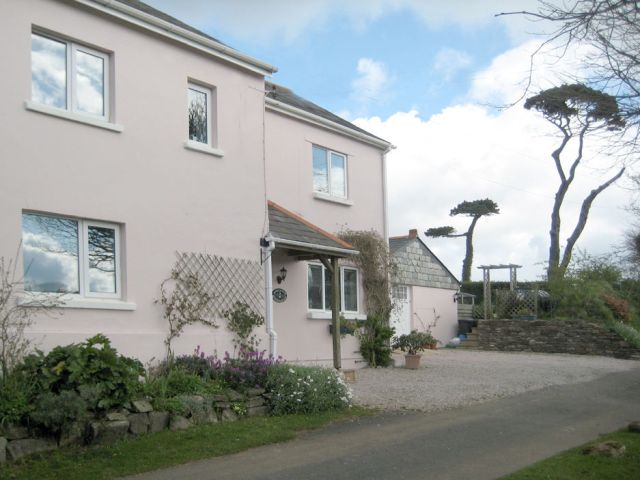
As you drive towards Coleton Fishacre, in the final dip in the road before the gates of the National Trust property, there is a lane to the right signed ‘Kingston Farm’. At the end of this lane lies Kingston Farm, a splendid farmhouse built in about 1750. The four farm cottages act as a sentinel to the farmhouse itself. Numbers 1 and 2 are relatively new being built in about 1905. They are on the left of the lane as you turn in. They were acquired by the Nethway Estate in 1954 and are still let by that estate. Numbers 3 and 4 are on the right just before Kingston Springs Farm, originally a cattle and grain store for the farm. Kingston Farm was mainly farmed by tenant farmers and the cottages tied to the farm as dwellings for the agricultural labourers. This can be followed through the censuses as far back as 1841. Older records, however, suggest that there has been habitation at Kingston since at least 1170 and probably very much before. It is quite probable that the birth of Kingswear was as an ‘overspill’ from Kingston.
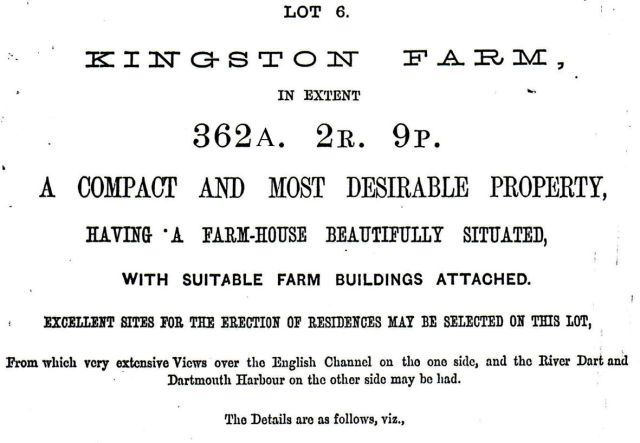
The name of the Fownes Luttrell family will be very familiar. They owned large amounts of land in the area which they put up for sale in July 1874. Lot 6, the Kingston Estate, was described as a farm of 362acres and ‘a compact and most desirable property having a farmhouse beautifully situated with suitable a r p farm buildings attached’. It was not sold at the auction, apparently failing to reach its reserve.
George Fownes Luttrell sold the farm to William Mitchelmore, a butcher from Dartmouth, on 9 July of the next year for £11,900. He borrowed £8,000 as a mortgage from Rev Septimus Cox Holmes Hansard, a clergyman from Bethnal Green, and from Sir John St George of Cornwall Gardens, Middlesex, described as a Major General in Her Majesty’s Army. The farm then passed through the hands of the Glendinning family to a Thomas Lakeman. He was a maltster and brewer of Brixham. His daughter, Ethel Tivy, eventually sold the farm in the early 1950s to the Hannaford family. The size of the estate rapidly diminished at this time with adjacent farms acquiring many of the fields.
Throughout this period it has been possible to trace many of the occupants of our cottage from the census returns. For instance, in 1841 John, Mary, Robert and William Lee were resident together with Laura Foal. John was an agricultural labourer working for Thomas Eales the tenant of Kingston Farm at that time.
Disaster struck the cottages on 23 October 1885 when a hayrick adjacent to the houses caught fire. This was discovered late at night, and although the Brixham fire engine ‘speedily arrived’, the cottages were destroyed. The occupants were cared for by Mrs Llewellyn of Nethway House who publicly thanked, via the Dartmouth Chronicle, the many donors of money and clothes. The cottages were then rebuilt, essentially as 2 up 2 down houses, with an outside earth privy. How did the Rundle family, in residence for the 1901 census, squeeze their whole family in; William 37 and Sarah 38 had seven children? Ettie and Edith were 12 and 10; William was the eldest boy at 17 whilst Arthur was only 9 months old on census night. Thomas Cole, 79, also lived with them and was described as ‘father-in-law’.
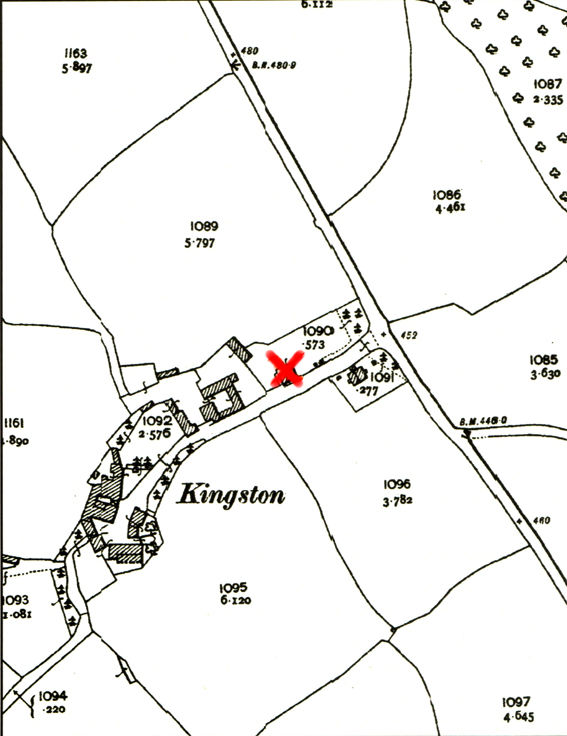
Cottages number 3 and 4 were finally sold off from the farm in the 1980s. Both were Map of 1906 showing Higher Backside at X then extended sideways and backwards to their current proportions. At about this time they became Northside Cottages, logical as they lie on that side of the lane, but both have been renamed again. A study of the maps associated with the sale of 1874 shows that all the fields were named. That behind No4 is Wimbeck, whilst our paddock is called Higher Backside.

Extract from the 1901 census
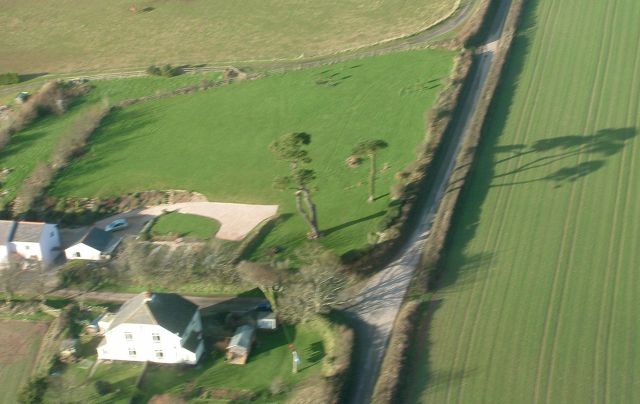
In January 2006 I took this aerial photograph which shows our two large Scots pines and the extent of our curtilage. Together with some landscaping, we have been able to reshape the vegetable and flower garden, as well as plant many young Monterey pines, whitebeams, rowans and numerous hawthorns.
KINGSTON
Diary of events at Kingston
10C Inhabitation at Kingston
12C Facy or Vasci family living at Kingston
1250 Ralph de Punchardon
1292 Assize Rolls describe Kyngeston Facy juxta Dertemouth
1302 Assize Rolls mention Kyngeston juxta Brikesham
1306 Hugh de Ferres holds Manor of Kingston
1503 Richard Ferrers inherits Kingston Facy
1750 Current Farmhouse built
1841 Census records start. Thomas Eales is tenant farmer
1851 Thomas Eales still tenant at farm
1861 Tenant farmer is now Thomas Parnell
1874 Nethway & Kingston Estates for sale
1875 George Mitchelmore buys Kingston Farm
1878 Harry Glendinning buys the farm
1879 He dies, farm passes to his father Robert
1881 Tenant farmer is James Walters
1883 Robert Glendinning’s next son Walter has farm
1883 He sells farm to Thomas Lakeman Tenant farmer — Mr Walters
1885 Fire at Kingston
1889 Mr Walters’ accident
1891 James Walters is still tenant farmer
1901 Tenant farmer — James Walters junior
1911 Thomas Lakeman dies, daughter Ethel marries Cecil Tivy
1919 Farm unsold at Auction. Mr J Coaker tenant farmer
1952 Hannaford family buy farm from Ethel Tivy
1954 167 acres of farm land sold to Nethway Estate including Cottages 1&2
1956 George Stephen Butler buys farm
1969 George Butler dies, son Jeremy takes over
1987 Jeremy Butler sells No. 3 Kingston Farm Cottages
1988…. and No. 4 Kingston Farm Cottages
 Kingswear Historians